
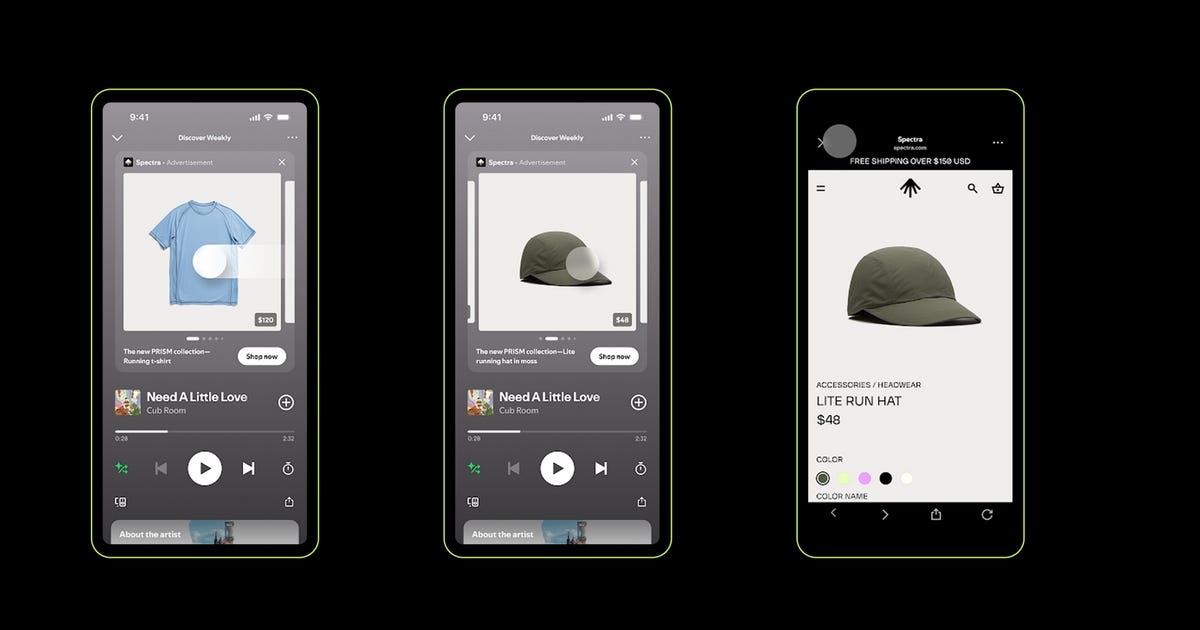
Spotify announced the launch of AI-supported scrollable ads and sponsored playlists, capitalizing on the growing interest in video content among users.
The new interactive “carousel” ad model allows brands to showcase six different products simultaneously through the “Now Playing” screen. This shift positions Spotify beyond a mere listening platform, integrating video podcasts and music videos into its offerings.
Spotify adapts the scrollable ad format pioneered by Meta, aiming to attract advertisers focused on both brand awareness and direct sales. Major brands like Priceline and GNC have begun pilot programs utilizing this new advertising model.
Brian Berner, Spotify’s Global Advertising Revenue Chief, emphasized the company’s goal to create an effective advertising suite that dispels the notion of audio as merely a tool for awareness. The suite delivers results at every stage, from setup to sales.
The platform also introduced a “takeover” model for playlists such as RapCaviar and Today’s Top Hits, allowing advertisers to be the sole sponsor of a specific list. Brand names appear prominently on the playlist’s main page, and free-tier users encounter fewer ad interruptions while listening.
Spotify is enhancing its ad infrastructure with increased investments in AI and machine learning, integrating A/B testing and automated bidding features into its Ads Manager panel to optimize ad spending. Last year, Spotify provided advertisers with free generative AI tools, with plans for further AI-focused updates through 2026 to strengthen its competitive stance against major players like Meta, TikTok, and Google.
Berner noted that advertisers choose Spotify due to user engagement, attention, and the time spent on the platform. Users reportedly spend an average of two hours daily on Spotify, with 90% considering it part of their daily routine. He summed up the strategy, stating it adheres to the “Advertising 101” principle: “Fish where the fish are.”
Spotify, a leading audio streaming platform, is leveraging its technological advancements and user engagement metrics to enhance its advertising capabilities in a competitive digital market.