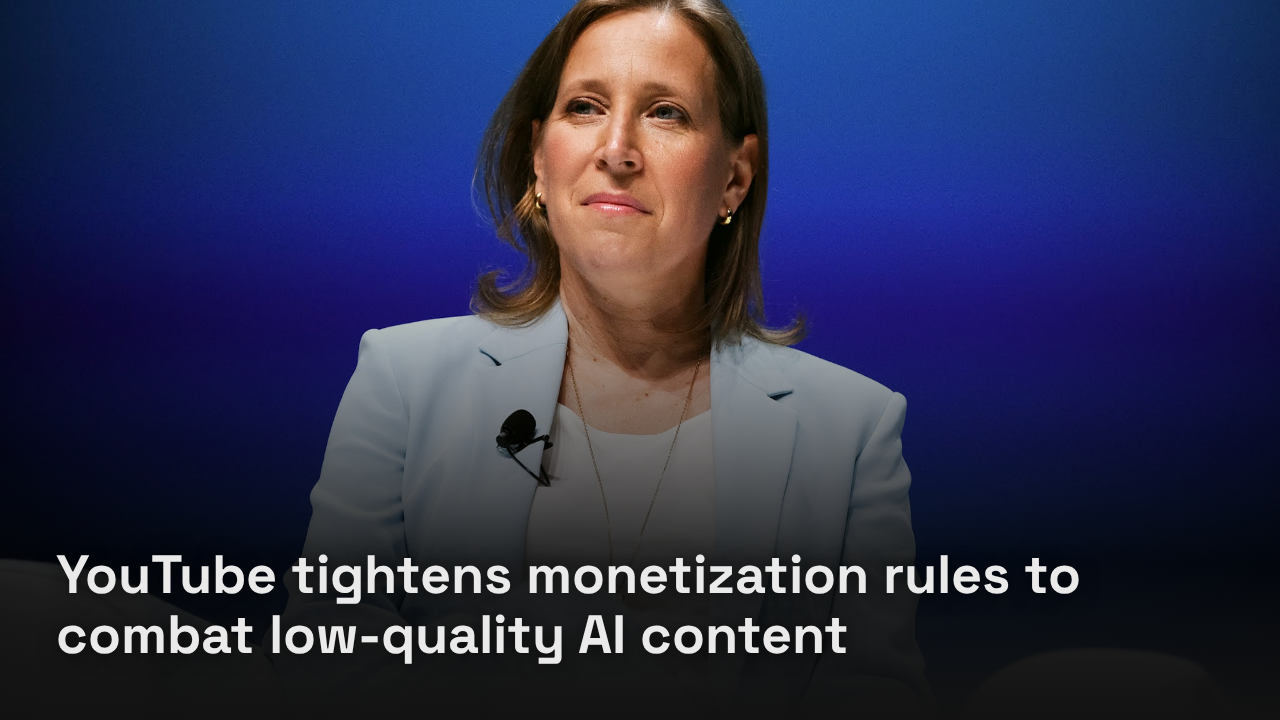
YouTube announced new regulations aimed at making it more difficult for low-quality and repetitive content generated by artificial intelligence to earn revenue on the platform. The updates, effective from July 16, clarify the monetization policies under the YouTube Partner Program through the definition of ‘non-original content.’
The new regulation specifically targets videos produced in bulk using AI tools that are largely similar to one another. The platform noted that content created using templates, CGI, or generative AI that does not provide unique value to users may fall outside the scope of monetization. This approach also applies to educational videos that reproduce existing content without making meaningful contributions.
YouTube’s updated rules focus not only on the method of production but also on the impact of content on users. Content that emotionally manipulates or disturbs viewers to gain views is also subject to penalties. Additionally, videos featuring AI characters that represent real people and provide misleading information in sensitive areas such as health, finance, law, and medicine are classified as high-risk content.
Matt Halprin, YouTube’s Head of Trust and Safety, stated that while AI is an important tool for creative production, the same technology can quickly be used to produce numerous similar pieces of content. Halprin emphasized that their goal is not to ban AI but to limit the production of low-quality content that focuses solely on generating advertising revenue.
The term ‘AI slop’ has recently gained traction in digital platforms, referring to content prepared quickly, cheaply, and without original contributions using generative AI tools. YouTube’s new approach aims to highlight content quality and the value provided to users rather than impose a blanket ban on AI-assisted content. Channels that heavily share the specified types of content may face removal from the YouTube Partner Program and lose access to advertising and subscription revenues.
Source: Foundern