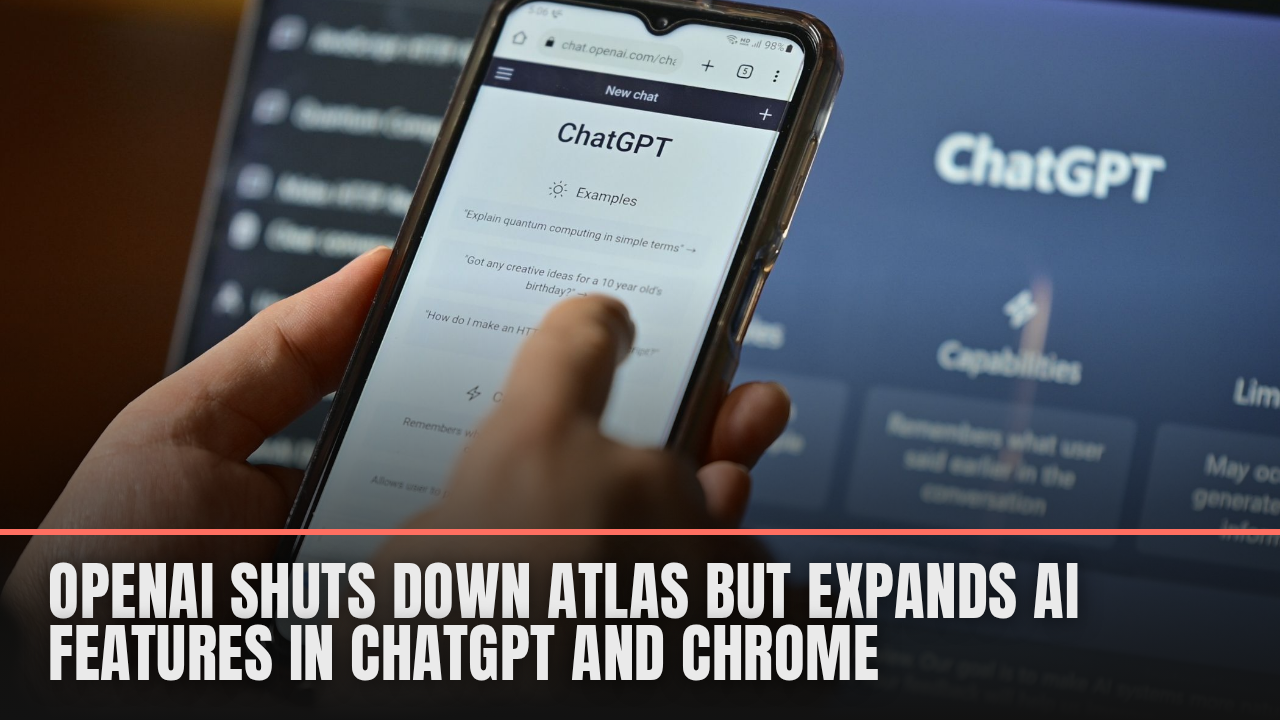
OpenAI is discontinuing Atlas, the AI-powered browser launched in October that integrated ChatGPT. The company will redistribute some features from Atlas across its ChatGPT desktop app and a Google Chrome extension. This decision follows recent directives from OpenAI CEO Fidji Simo, who instructed the team to reduce focus on non-core projects, leading to the closure of the AI video-generation tool Sora.
This move reflects a broader trend in the AI industry, where companies are competing to enhance web browsing experiences. Competitors like Perplexity and The Browser Company have introduced new browsers, while Google and Microsoft have upgraded Chrome and Edge with AI features.
OpenAI has determined that a browser serves better as a feature rather than a standalone product. The new ChatGPT extension for Chrome will allow users to interact with the context of web pages, enabling them to ask questions, summarize content, and initiate longer tasks directly within the browser.
Additionally, the updated ChatGPT desktop app will include a more powerful browser, allowing users to navigate websites, log into accounts, and download files without leaving the app. A separate cloud-based browser will operate on OpenAI’s servers, enabling the app’s agents to perform tasks on behalf of users.
These enhancements aim to create a seamless workspace that integrates Chrome, the desktop app, and AI capabilities, positioning ChatGPT to compete directly with similar offerings from Google, such as the Gemini Side Panel.