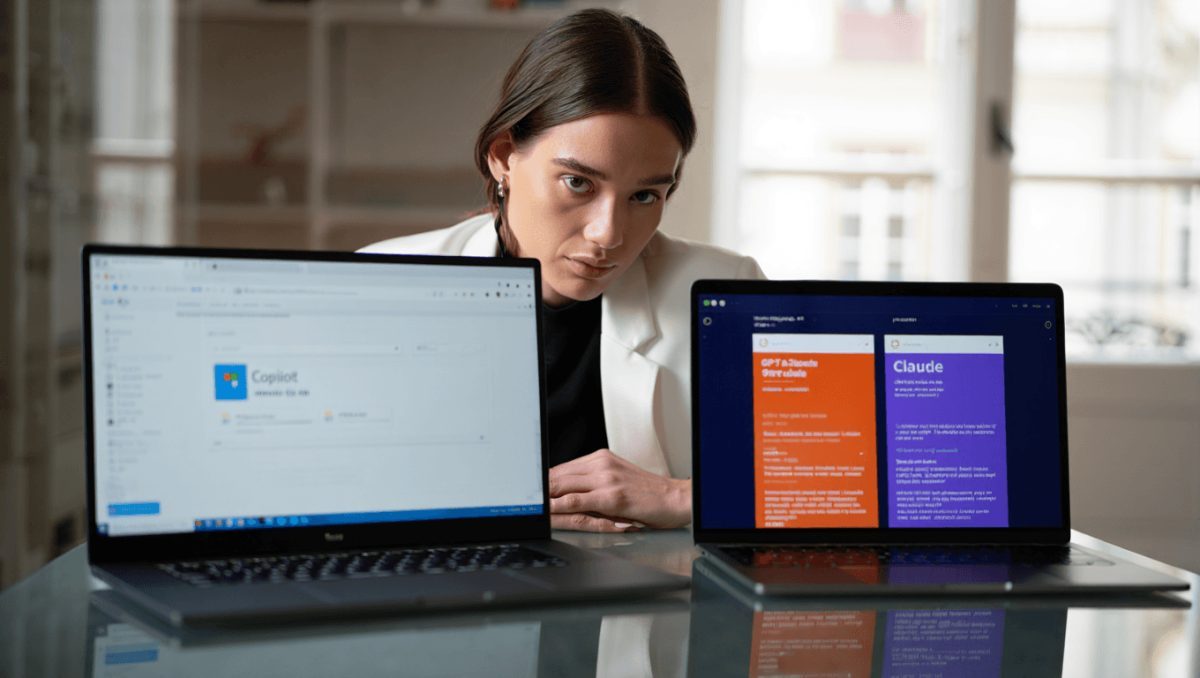
Microsoft has introduced multimodal features to its Copilot research assistant, enhancing user workflows by integrating multiple AI systems. The new Critique feature utilizes OpenAI’s GPT for drafting output and Anthropic’s Claude for review, allowing users to compare results from various AI models.
This development indicates a shift towards a multi-model approach in response to competition from products like Google Gemini. Microsoft stated that using models from different vendors can reduce AI hallucinations and enhance output quality.
The Critique feature achieved a score of 57.4 on a research quality benchmark, surpassing Claude Opus’s score of 42.7 when used independently. Microsoft is moving away from relying solely on OpenAI, citing Anthropic’s models as superior for certain tasks, including creating PowerPoint presentations and performing financial functions in Excel.
As of January, Microsoft reported 15 million paid Copilot seats, roughly 3.3% of its 450 million commercial Microsoft 365 users. The expanded Copilot Cowork tool aims to streamline complex tasks, transitioning from quick assistance to executing multi-step workflows.
Microsoft is establishing a “trust layer” within its enterprise software, ensuring that AI systems can work together while handling identity, permissions, and compliance requirements. This infrastructure is designed to facilitate the use of AI systems as agents capable of performing actions across multiple steps.
Additionally, Microsoft plans to introduce a new paid tier, Microsoft 365 E7: The Frontier Suite, priced at $99 per user per month. The company is committed to leveraging Anthropic technology within Microsoft 365, enhancing its software’s capabilities.