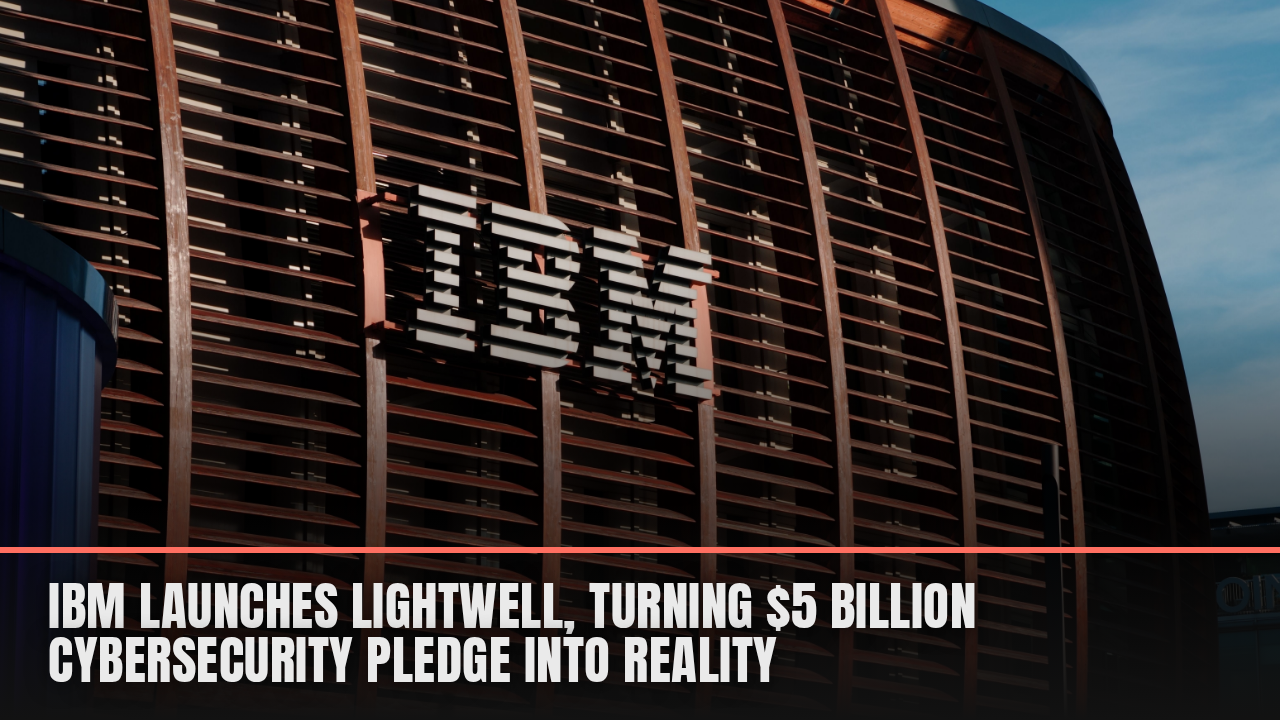
IBM and Red Hat launched Lightwell on July 8, transforming a $5 billion commitment into two market-ready products for enterprises. The launch includes a live catalog, pricing structure, and a client list within ten weeks, a timeline that contrasts with typical lengthy waits for corporate security tools.
In May, IBM announced plans to invest $5 billion and deploy over 20,000 engineers to address vulnerabilities in open source code, as stated in Red Hat’s announcement. IBM chairman Arvind Krishna articulated the aim of securing open source at its source, although specific product details remained unclear at that time.
The first product, Lightwell Network, is now available, featuring over 6,500 remediated and digitally signed software components, including those in Java and Python, according to IBM’s Newsroom. The system integrates an AI-driven remediation engine with human engineers who validate fixes, allowing companies to backport patches into existing software versions without necessitating full upgrades.
The second offering, Lightwell Clearinghouse Premier, clarifies the pricing structure that IBM had previously left ambiguous. Rob Thomas, IBM’s senior vice president of software, indicated that the service would be subscription-based, priced according to the number of software packages a company utilizes. Currently, this service is exclusive to financial services firms.
Early adopters listed in Red Hat’s announcement include Bank of America, JPMorgan Chase, Citi, Goldman Sachs, and Visa, which piloted Lightwell prior to its pricing rollout. IBM is prioritizing sales to these institutions that contributed to the product’s development.
IBM shares closed at $302.05 on July 8, down 1.33% for the day, reflecting market expectations that may have already accounted for the launch. This follows Bank of America’s price target increase to $330 on July 6, as reported by CNBC.
Financial institutions are particularly incentivized to adopt Lightwell due to the high compliance costs associated with unpatched software vulnerabilities. ARC president and CEO Scott DePasquale noted that no single institution can manage the increasing scale of open source vulnerabilities independently, underscoring the demand for Lightwell.
IBM is expanding partnerships within the financial sector. In June, IBM and Palo Alto Networks announced a collaboration to integrate Palo Alto’s virtual network patching with Lightwell’s software fixes, enhancing protection while permanent patches are developed, according to a Palo Alto Networks press release.
Lightwell’s effectiveness hinges on the accuracy of its AI component. IBM references Anthropic’s Project Glasswing to support this aspect. Anthropic revealed its Claude Mythos Preview model has examined over 1,000 open source projects, identifying 6,202 vulnerabilities deemed high or critical severity, according to their research update.
Of the 1,752 vulnerabilities reviewed by independent security firms, 90.6% were confirmed as valid, with 62.4% classified as high or critical severity. Extrapolating this data suggests that the model may identify nearly 3,900 genuine high or critical vulnerabilities in open source code. However, the fact that over a third of flagged issues do not qualify as critical threats upon review is a significant consideration for Lightwell’s business model.