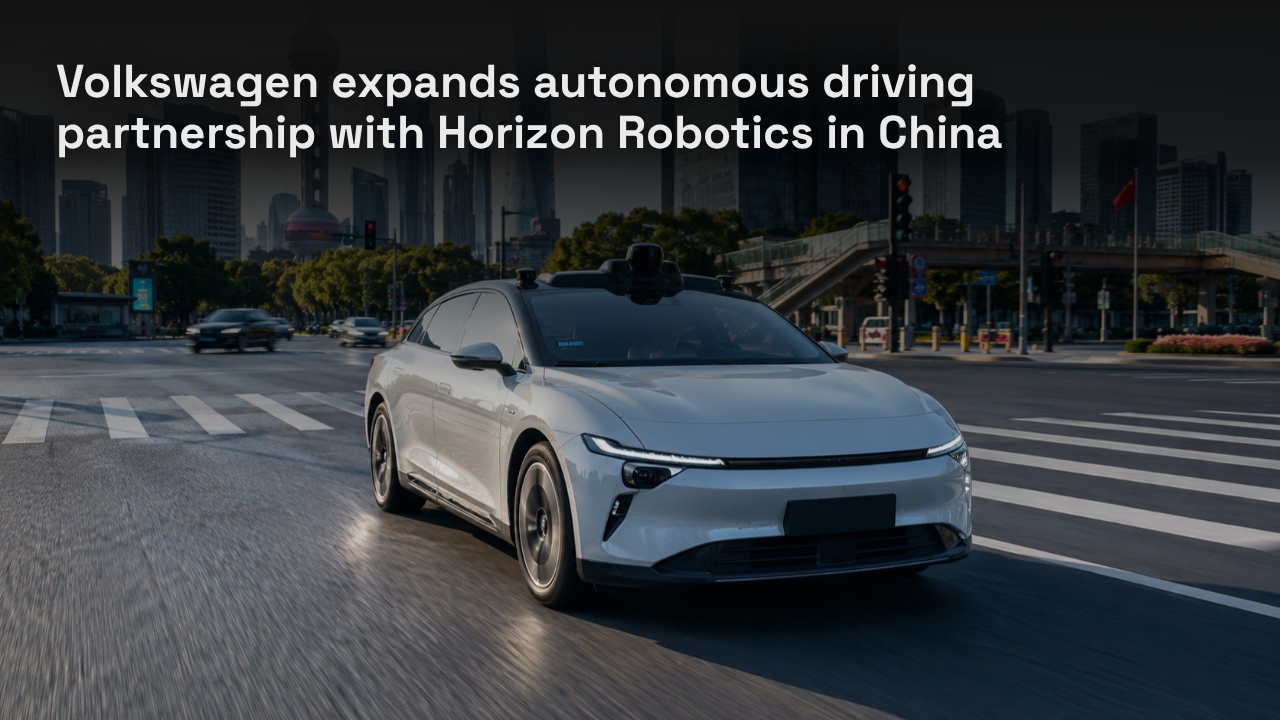
Volkswagen is expanding its partnership with Horizon Robotics to advance autonomous driving technologies in China. The company plans to launch Level 3 autonomous driving features in the second half of 2027.
The Level 3 system will allow vehicles to take over driving tasks under specified road and traffic conditions. However, the driver must be ready to resume control when requested by the system.
The implementation of this technology will depend on legal approvals, road tests, and safety validations in China. Details on which models and cities will first implement the technology have not yet been disclosed.
CARIZON, a subsidiary of Volkswagen Group China, began operations in November 2023. It will leverage Horizon Robotics’ AI model to develop a unified driving model that manages the entire process from sensor data to driving decisions.
The partnership includes significant technological investments, with Volkswagen having announced approximately 2.4 billion Euros for the collaboration in 2022. The C7H chip and GAIA World Model data platform will support Horizon Robotics’ AI model, enabling real-time processing of data from vehicle cameras and sensors.
GAIA can process about 2 terabytes of data per vehicle daily, while the test fleet generates over 100,000 kilometers of driving data each day. This platform accelerates data analysis by six times compared to traditional systems.
CARIZON plans to introduce its first Level 2+ driving support system in the ID. UNYX 07 by the end of 2025. This system will provide features like route tracking on highways and memory parking, although drivers will still need to monitor the road.
Volkswagen aims to integrate its autonomous driving system with the China Electronic Architecture (CEA) for more efficient software updates and driving features. The CEA 2.0 architecture is set to be implemented in 2027, combining the driving system with a digital cockpit on a single processing platform.
Volkswagen also plans to develop Level 4 autonomous driving applications in the future, which would allow vehicles to operate without human intervention in designated areas. The company expects that the technology developed in China may be utilized in select international markets in the future.