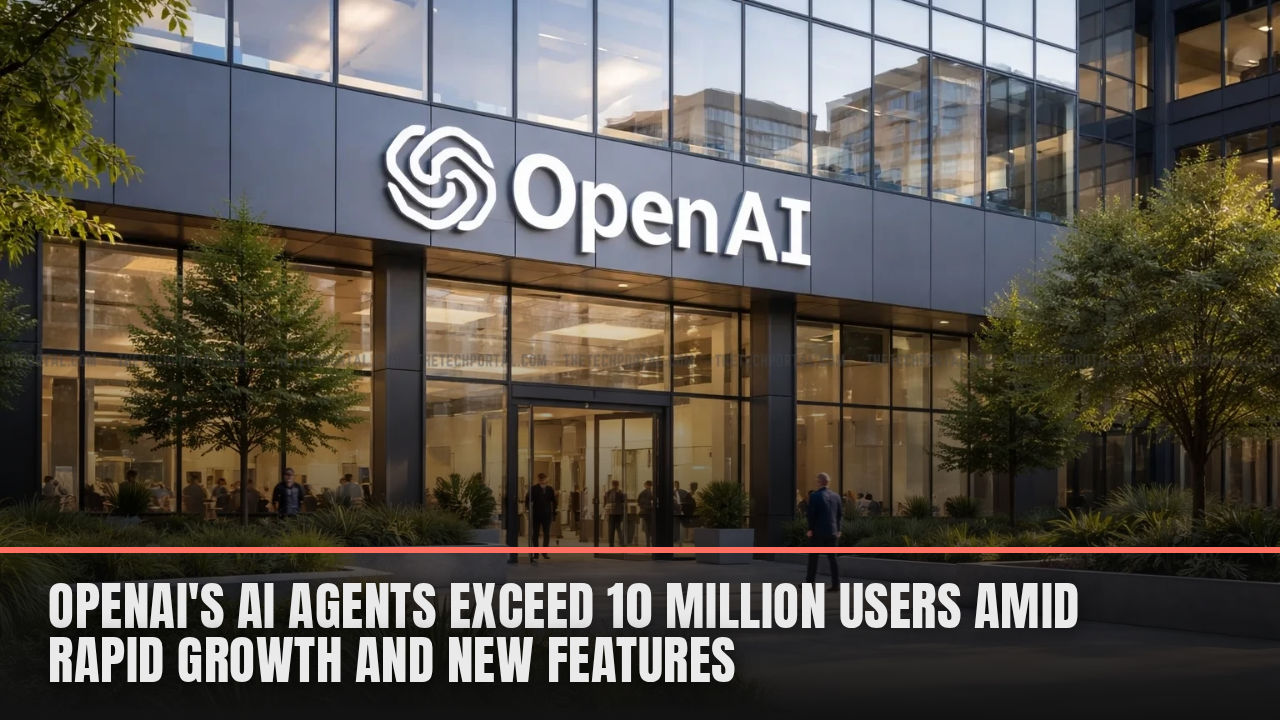
OpenAI reports that its AI agent products have surpassed 10 million active users, driven by the launch of ChatGPT Work on July 9 and the integration of its Codex coding agent into a unified desktop application. This milestone reflects significant growth following the release of the GPT-5.6 model family, which introduced a new mode designed for longer, multi-step tasks that can interact with over 1,400 connected applications and files, according to reporting from The New Stack.
ChatGPT Work differs from traditional chatbot interactions by focusing on a goal rather than a simple prompt. It breaks tasks into actionable steps and operates autonomously for extended periods, producing completed spreadsheets, slides, documents, and web applications. Codex experienced rapid growth, increasing from fewer than 1 million weekly users in February to over 8 million by mid-July after the integration into the ChatGPT desktop app.
Growth trends indicate that non-developers, such as analysts, marketers, and designers, now represent approximately 20% of Codex’s user base and are adopting the tool at a rate three times faster than software engineers. An OpenAI-supported research paper released in June, in collaboration with Columbia, Duke, and the University of Pennsylvania, noted that the most significant rise in agentic AI usage is occurring among individuals outside the traditional software developer demographic.
Within OpenAI, usage of Codex has increased substantially, with 97.9% of employees now utilizing the tool, including those in non-technical departments like Legal and Recruiting, up from about 40% in August 2025.
Co-founder Greg Brockman announced a promotional campaign on X, offering $100 in API credits to the first 10,000 users who tweet about ChatGPT Work. Brockman stated, “Tweet what you love about ChatGPT Work, claim $100 in free credits, get more work done,” echoing a previous promotion for GPT-5.6. This campaign represents an estimated $1 million marketing effort aimed at generating interest in the new product as OpenAI faces increasing competition from Anthropic’s Claude Code and Google’s Gemini Spark, which launched its own macOS agent in early July.