
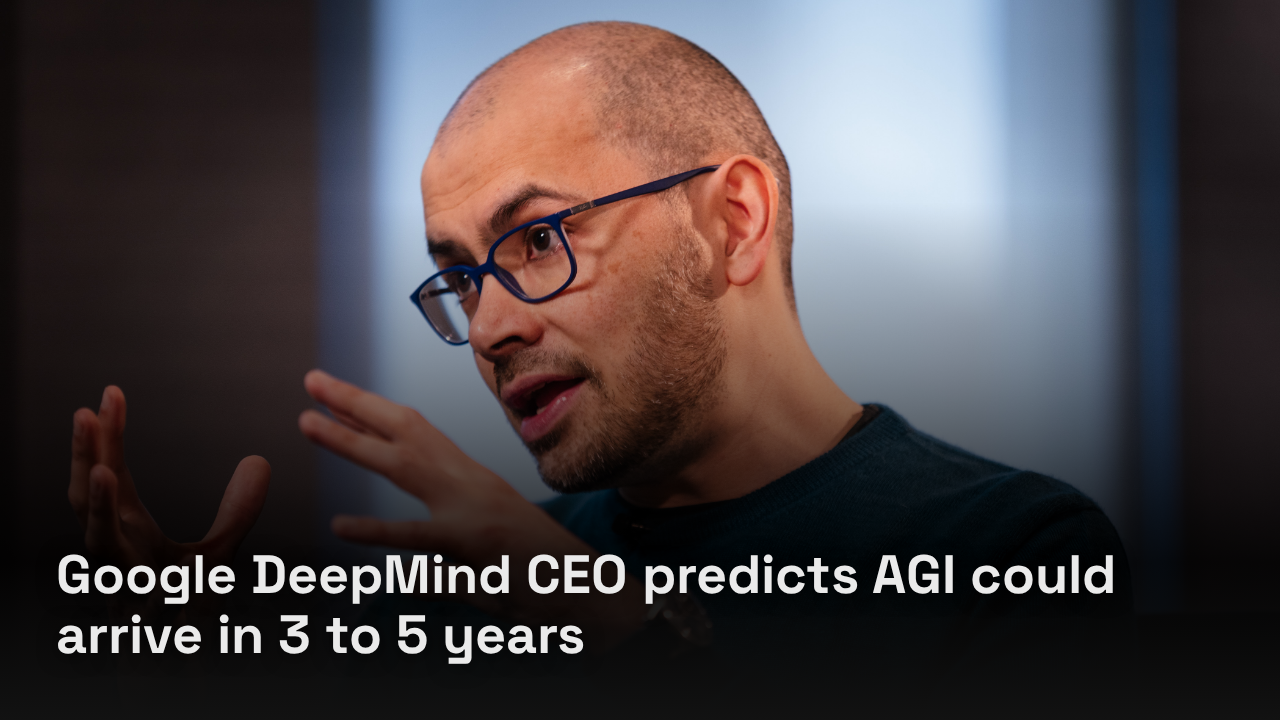
Google DeepMind CEO Demis Hassabis stated that Artificial General Intelligence (AGI) could be developed within the next three to five years. This timeline suggests that AGI may arrive sooner than many experts anticipated, carrying the potential to transform industries, economies, and societal structures.
In a recent discussion highlighted by AI Grid, Hassabis emphasized the urgency of balancing innovation with responsibility. He proposed a structured framework for AGI’s rollout, which includes rigorous pre-release testing, dynamic safety benchmarks, and the establishment of a global standards body to oversee AGI systems and their associated risks.
Hassabis outlined several potential applications for AGI, including accelerating drug discovery and advancing renewable energy solutions. He noted that AGI could significantly enhance healthcare by identifying treatments and cures for diseases more rapidly than current methods allow. Similarly, AGI could contribute to environmental efforts by promoting clean energy technologies.
The CEO also addressed the challenges posed by AGI’s development, including the need for ethical considerations and global cooperation. He highlighted the necessity for cybersecurity protocols and fail-safe mechanisms to prevent misuse of AGI technologies.
Hassabis warned that AGI’s societal impact might surpass that of the industrial revolution, fundamentally altering economic structures and daily life. He acknowledged the risks associated with such rapid advancements, including potential disruptions to existing systems and ethical dilemmas regarding human identity and purpose in an AI-driven future.
To navigate these challenges, Hassabis reiterated the importance of proactive preparation, advocating for the establishment of ethical frameworks and robust safety measures in the development of AGI.