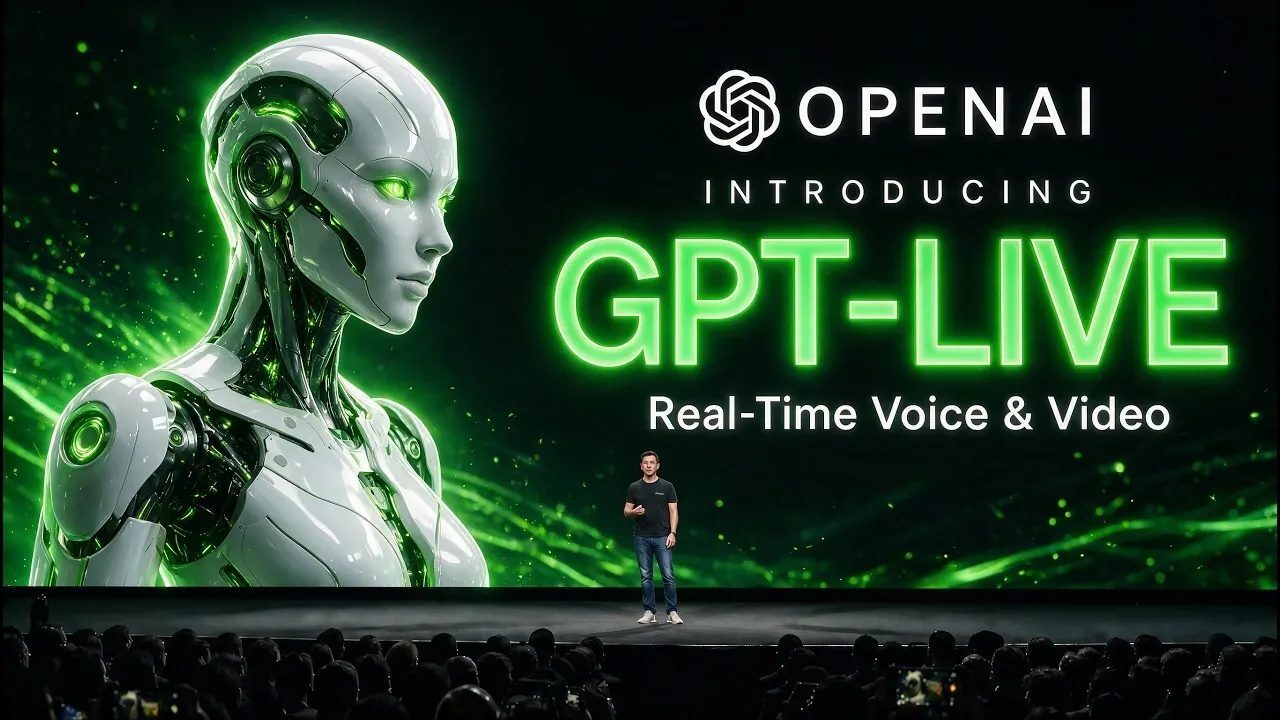
OpenAI has launched its GPT-Live voice models, GPT-Live-1 and GPT-Live-1 mini, which enable ChatGPT to listen and speak simultaneously. This marks a shift from traditional turn-based interactions common in AI voice assistants. The models are being rolled out globally starting today.
The GPT-Live architecture addresses a key limitation of voice AI—its inability to manage natural conversational overlap. Unlike previous models that require a rigid call-and-response format, GPT-Live-1 can handle interruptions and maintain context while continuing the conversation.
Kundan Kumar, research lead for the GPT-Live model, stated, “GPT-Live can still remain in conversation with the user,” and described it as OpenAI’s “smartest voice model” to date. Kumar joined OpenAI from Character.AI and has led audio model development since early 2026.
When GPT-Live-1 encounters complex queries requiring deeper reasoning or real-time information, it routes these to OpenAI’s text models, which include web search capabilities, while maintaining the voice interaction. The model also enhances conversations about topics such as weather, stocks, and sports by providing AI-generated visuals that display relevant information.
The launch of GPT-Live occurs during a particularly active week in AI developments. OpenAI is also set to release GPT-5.6 Sol on Thursday, its most advanced text model, following a delay requested by the government. Additionally, Meta has introduced its Muse Image generation model this week, and xAI is reportedly preparing a new model in partnership with Anysphere, the developer of the coding tool Cursor.
The GPT-Live models represent the consumer-facing culmination of efforts that began with OpenAI’s developer-focused GPT-Realtime-2 in May, which integrated GPT-5-class reasoning into voice interactions via API. With full-duplex audio now available to ChatGPT’s hundreds of millions of users, OpenAI aims to establish voice as a primary interface for AI.