Nissan has announced plans to incorporate self-driving software from UK startup Wayve into its advanced driver-assistance system beginning in 2027, signaling a significant step for both the Japanese automaker and the rapidly growing artificial intelligence company.
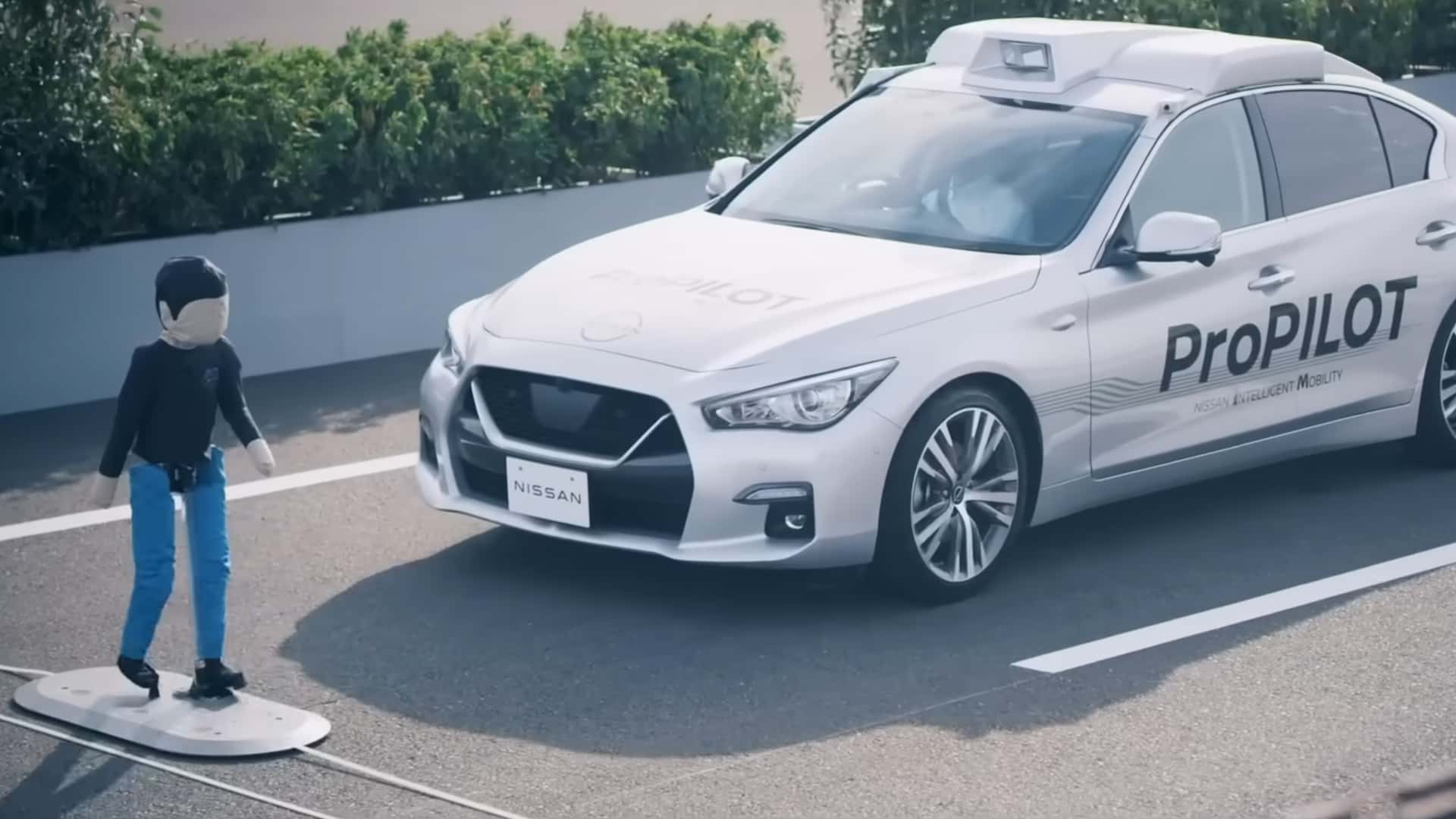
The integration will bring together Wayve’s proprietary software and an array of sensors, including lidar technology sourced from a yet-to-be-named supplier. This combination will be embedded within Nissan’s existing ADAS platform, ProPilot. According to Nissan, this upgraded system is expected to set “a new standard for autonomous driving with advanced collision avoidance capability,” further enhancing the automaker’s technological edge in driver safety and automation.
For mass production, the new system will be classified as Level 2 automation, as defined by the Society of Automotive Engineers. This means it will be capable of handling multiple driving tasks such as steering and braking, but will still require the driver’s full attention and supervision at all times. Nissan has yet to specify which of its vehicle models will be equipped with the new technology when it debuts in 2027.
Wayve, founded in 2017, has quickly risen to prominence in the autonomous vehicle sector. The London-based startup has attracted more than $1.3 billion in funding, drawing investments from global technology leaders including Nvidia, Microsoft, SoftBank Group, and Uber. Wayve’s approach to automated driving stands out in the industry for being self-learning rather than rules-based—a methodology that shares similarities with Tesla’s systems but carries its own unique advantages.
The cornerstone of Wayve’s technology is its data-driven, end-to-end learning approach. This allows the system to support both “eyes on” assisted driving and more advanced “eyes off” autonomous driving. Unlike conventional systems that rely heavily on pre-defined rules or extensive high-definition maps, Wayve’s AI leverages real-world data, making it more adaptable and less dependent on specific sensor configurations. The software can operate using a wide range of sensor types, including cameras and radar, and processes raw data from these inputs to make real-time driving decisions.
Another distinguishing aspect of Wayve’s business strategy is its intention to license its “Embodied AI” platform to automakers and technology companies, not just deploy it in its own fleet. This move contrasts with Tesla, which predominantly uses its proprietary technology within its own vehicles. Wayve’s software is also highly compatible with existing vehicle hardware, able to run on GPUs already present in OEM vehicles, such as Nvidia’s Orin chip or other similar processors. This broad compatibility not only makes the system more flexible but also significantly reduces deployment costs, paving the way for its adoption across driver-assistance systems, robotaxis, and even robotics applications.
According to Nissan spokesperson Shiro Nagai, Wayve’s Embodied AI foundation model is trained on extensive real-world driving data, allowing it to adapt to different vehicle types and driving environments. Nagai emphasized that combining Nissan’s established automotive technology with Wayve’s advanced AI “will allow future Nissan vehicles to closely replicate the judgment and actions of a careful and competent human driver in complex driving scenarios.”