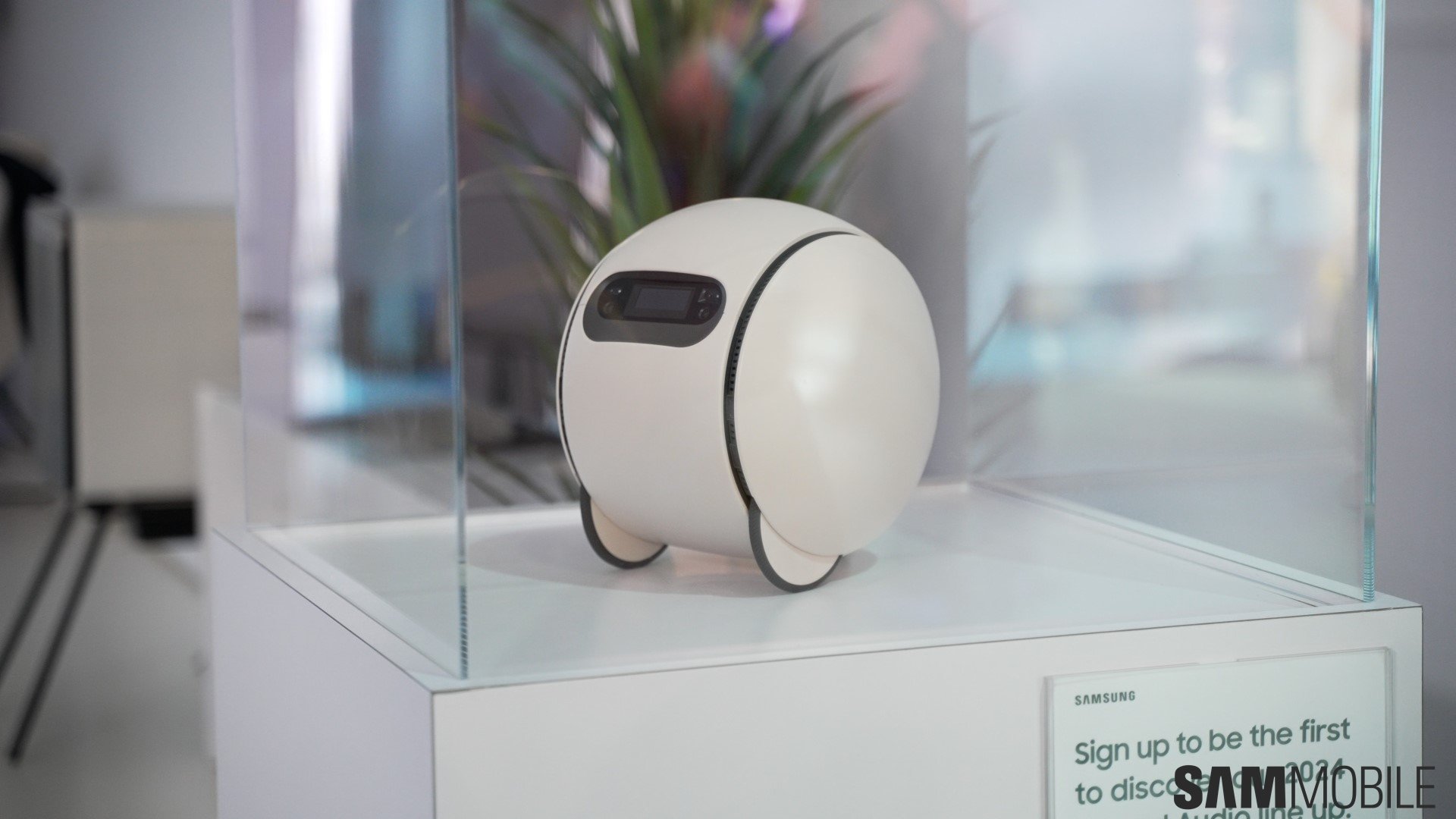
Samsung is preparing to launch its long-anticipated home robot, Ballie, in the United States this summer, marking a significant step forward for domestic robotics and offering pre-registration through the company’s website.
Ballie, a compact, ball-shaped robot equipped with two wheels, is designed to function as a personal assistant within the home. Initially unveiled in 2020, Ballie has since undergone several rounds of enhancements, evolving into a more sophisticated device that now includes a built-in projector, speaker, and microphone. This array of features enables Ballie to operate interactively within the home environment, providing capabilities akin to those of smart displays.
Integration with Samsung SmartThings allows Ballie to control and monitor a variety of smart home devices. Users can rely on Ballie to perform tasks such as adjusting lighting, managing thermostats, or interfacing with other compatible home gadgets, all coordinated through Samsung’s unified smart home ecosystem.
Distinguishing itself from other domestic robots, Ballie now benefits from a partnership between Samsung and Google, equipping it with Gemini—Google’s multimodal artificial intelligence. This advanced AI, combined with Samsung’s own generative large language models, grants Ballie the ability to process and understand multiple types of input. According to Samsung, the robot is capable of interpreting audio and voice commands, analyzing visual information from its onboard camera, and responding to sensor data drawn from its surroundings, thus enabling a more responsive and personalized assistant experience.
The integration of advanced AI not only expands Ballie’s technical prowess but also allows for more tailored lifestyle support. Samsung states that Ballie can provide personalized advice such as fashion recommendations, offering users suggestions to complement their personal style. The robot is also designed to support well-being, giving guidance when prompted with phrases like “I’m tired,” leveraging reputable sources to recommend exercise routines or, through its connectivity with smart home devices, optimize sleep environments and monitor sleep patterns for better rest.
Demonstrations of Ballie’s capabilities have captured public attention at industry events. At CES 2025, the robot was shown projecting requested information onto a wall, as well as identifying ideal wine pairings for dinner. Interaction with Ballie was demonstrated both through voice commands and via projected touch interface elements, which users could operate, for example, by pressing with their feet. Despite its charming BB-8-like design and impressive feature set, all public demonstrations have been highly controlled, with observers not permitted direct interaction or hands-on testing of the robot.
This summer’s planned release signals Samsung’s first concrete move to deliver a general-purpose home robot to consumers, following several years of teasers and tightly managed showcases. Ballie enters a market that is increasingly crowded, as tech giants including Apple, Meta, Google, and Samsung’s chief competitor LG are all actively developing or announcing similar home robotics projects.