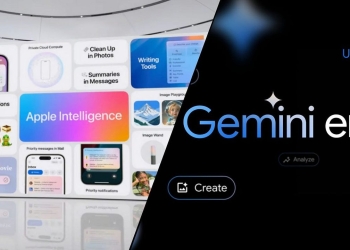
Google has unveiled Gemini Canvas, a groundbreaking AI-powered platform that allows users to build apps, websites, games, and e-learning tools without writing a single line of code. Announced as a free service accessible with just a Google account, Gemini Canvas leverages advanced AI models to transform natural language prompts into functional prototypes, democratizing app development for beginners and experts alike.
The platform’s core strength lies in its intuitive design, which prioritizes creativity over coding expertise. Users can describe their ideas in plain English, and the system generates polished user interfaces, wireframes, and even visual assets in real time. This approach significantly reduces the time and effort traditionally required for prototyping, making it ideal for designers, entrepreneurs, hobbyists, and professional developers. By automating complex tasks, Gemini Canvas shifts the focus from technical hurdles to imaginative exploration, fostering a new era of accessible digital creation.
Gemini Canvas distinguishes itself through a combination of cutting-edge AI integration and user-centric features. At its heart are two powerful models: Gemini 2.5 Pro and Flash (Nano Banana). The Gemini 2.5 Pro model excels at interpreting complex prompts, delivering precise and contextually relevant outputs that align with users’ visions. Meanwhile, Flash (Nano Banana) emphasizes speed and efficiency, ensuring quick iterations without compromising quality. Together, these models power the platform’s ability to handle diverse development needs, from simple layouts to intricate interactive elements.
Key to its appeal is the “Select and Ask” feature, which enables natural language editing. Users can select any app element—such as a button, image, or layout—and simply describe changes, like “resize this button to be larger and add a shadow effect.” The AI processes the request instantly, updating the design without manual coding. This functionality not only streamlines modifications but also makes the platform approachable for those without programming backgrounds.
Another standout element is real-time code visualization. As users experiment, they receive live previews of how their app will function, including code snippets that highlight changes. This transparency allows for immediate feedback, helping creators refine their work on the fly and catch potential issues early. For developers, this means bridging the gap between ideation and implementation, while non-technical users gain confidence through visible progress.
AI-powered feature integration further enhances productivity. The platform automates the addition of sophisticated components, such as bio generators for user profiles or art feedback systems for creative apps. For instance, integrating a dynamic quiz module into an e-learning tool requires only a prompt like “add an interactive quiz with multiple-choice questions and scoring.” The AI handles the underlying logic, ensuring seamless functionality.
Gemini Canvas’s versatility shines in its support for a wide array of projects. In web design, users can craft photography portfolios with customizable galleries, responsive layouts, and interactive hover effects—all generated from descriptive inputs. For gaming enthusiasts, the platform facilitates the creation of Minecraft-inspired worlds, complete with block-based mechanics, character controls, and environmental interactions. E-learning developers might build platforms featuring multimedia lessons, progress trackers, and adaptive quizzes tailored to learner needs.
These capabilities extend to professional sectors as well. Entrepreneurs can prototype startup apps, such as inventory management tools or customer engagement platforms, in hours rather than weeks. Designers benefit from rapid wireframing, allowing them to iterate on user experiences for mobile or desktop applications. Even in education, teachers and content creators can develop engaging tools like virtual simulations or gamified study aids, broadening access to interactive learning resources.
Statistics underscore the platform’s potential impact. Traditional app development can take months and cost thousands of dollars, often requiring teams of specialists. Gemini Canvas compresses this to minutes or hours, with no financial barriers since it’s entirely free. Early adopters report up to 80% time savings on prototyping, based on similar no-code tools, highlighting how such platforms could accelerate innovation in a market projected to reach $187 billion for low-code/no-code solutions by 2030, according to Gartner forecasts.
The platform’s industry-spanning flexibility also promotes collaboration. Teams can share projects via Google accounts, enabling real-time co-editing and feedback. This is particularly valuable for remote workforces, where quick prototyping can inform business decisions without extensive resources.
Designed for inclusivity, Gemini Canvas requires minimal setup—just a Google account to get started. There’s no subscription model, hidden fees, or premium tiers locking away core features, making it a true equalizer in the tech space. The interface is clean and intuitive, with drag-and-drop elements complemented by AI suggestions that guide users through the process.
For beginners, tutorials and prompt examples lower the entry barrier, while advanced users appreciate the depth of customization. The platform adapts to skill levels: novices might stick to basic prompts, whereas experts can dive into generated code for fine-tuning. This dual appeal ensures broad adoption, from individual hobbyists to enterprise teams.
Usability is further boosted by recent updates. A streamlined toolbar now allows one-click insertion of AI features, reducing navigation time by an estimated 40%. Built-in version control lets users snapshot their work and revert to earlier versions effortlessly, preventing data loss during experimentation. These enhancements reflect Google’s ongoing commitment to user feedback, with iterative improvements rolled out based on community input.
Under the hood, Gemini Canvas builds on Google’s robust AI ecosystem. The Gemini 2.5 Pro model, known for its multimodal capabilities, processes text, images, and code interchangeably, enabling holistic app generation. Flash (Nano Banana), a lightweight variant, optimizes for on-device performance, ensuring smooth operation even on standard hardware.
This technical foundation allows the platform to handle nuanced tasks, such as generating responsive designs that adapt to different screen sizes or incorporating accessibility features like alt text for images. Security is prioritized, with Google’s cloud infrastructure protecting user data and ensuring compliance with standards like GDPR.
In the broader context of AI coding tools, Gemini Canvas stands out for its no-code emphasis. While competitors like ChatGPT or Claude focus on code generation for programmers, Gemini Canvas targets the full spectrum, making it a complementary tool in the 2025 AI development toolkit. Analysts predict such platforms will drive a 50% increase in non-technical creators entering the app market within the next two years.
Despite its strengths, Gemini Canvas isn’t without limitations. Complex enterprise-grade apps may still require custom coding for scalability, and AI-generated outputs occasionally need manual tweaks for precision. However, these are minor compared to the platform’s benefits, and Google has signaled plans for expansions, including deeper integrations with tools like Google Workspace and Android Studio.
Looking ahead, Gemini Canvas is poised to shape the future of creative coding. By empowering users to prototype at unprecedented speeds, it could spark a wave of innovation, from indie games to AI-enhanced business solutions. As AI models evolve, expect enhancements like voice-activated editing or collaborative multiplayer modes, further blurring the lines between idea and execution.