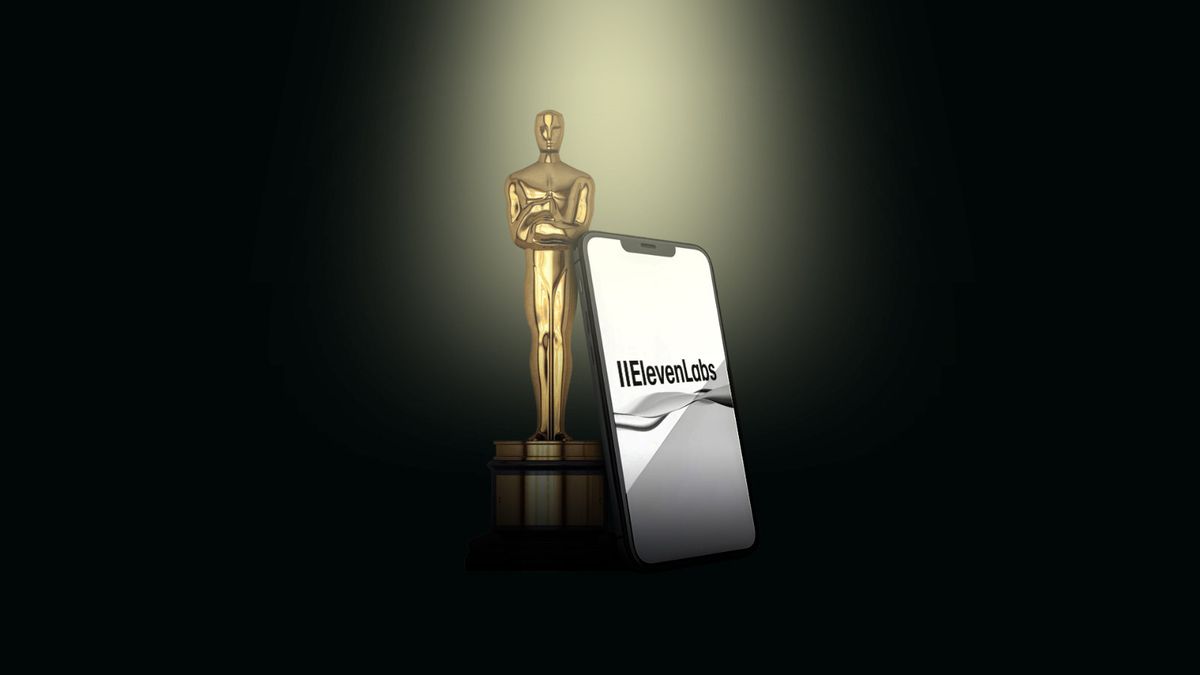
Celebrities are now worrying about their voices being cloned and used without their consent, thanks to advanced AI voice cloning tools that can create realistic versions of their voices in under a minute.
The focus is currently on voice acting, as tools like ElevenLabs, Respeecher, and PlayHT can replicate a celebrity’s voice, including their emotion, cadence, inflection, and hesitation patterns, making it difficult to distinguish from the real thing. This technology has made it possible for anyone with a credit card and a voice sample to create a clone of a celebrity’s voice, something that was previously the domain of high-end Hollywood studios.
Celebrities are not taking kindly to this development, with many lawyering up to protect their voices. Scarlett Johansson threatened legal action after OpenAI released a ChatGPT voice assistant that closely resembled her voice without her involvement. Tom Hanks also spoke out against the use of his AI-generated voice to promote a dental plan in 2023. Other celebrities, such as Taylor Swift, have also been victims of voice cloning, with fake songs being created and gaining millions of streams before being pulled due to copyright concerns.
The use of AI voice cloning has sparked a nightmare for celebrities, who see their voices as part of their brand and livelihood. The technology is so realistic that it has been used to create fake songs, promotional materials, and even entire videos without the celebrity’s consent or compensation. During the 2023 SAG-AFTRA strike, protections around voice likeness were a key issue, with the union pushing for contract language that would bar studios from using AI-generated performances without consent and compensation.
As a result, actors now have some control over how their vocal identity is used or recreated. This is not just about celebrity ego, but also about protecting their reputation and income, which are directly at risk when their cloned voice is used without their involvement. The fact that these tools are public-facing means that it’s not just major studios that can misuse a voice, but anyone.
Some platforms, such as ElevenLabs, have tried to bring in licensing frameworks to control the use of voice cloning. Its Voice Library allows verified voice actors to license their voices for commercial use, with users retaining rights and each request for use being tracked and monetized. Replica Studios has also developed a paid synthetic voice service, where developers can purchase performances from a curated library of approved voices.
However, enforcement remains weak, with these platforms largely relying on self-policing. If someone uploads and clones a celebrity voice without consent, it often requires manual reporting or legal escalation to remove it. There is growing interest in using cloned voices not just in static media but in interactive systems, such as AI companions, virtual advisors, and “relationship bots.”
Services like Candy AI and Character AI are already using text-to-speech to power personalized voice chats, and it’s not hard to imagine a version where the voice of a celebrity, legally licensed, powers one of these systems. This opens up a potential new market for celebrity voice licensing, but it would require secure attribution, smart contracts, consent management, and watermarking standards to scale legally.
For celebrities, their voice is not just a part of their self-expression, but an asset, a brand, and a battleground. As AI tools get better at imitation, we are forced to confront what ownership means in the digital age. The question now is who gets to profit from synthetic speech and under what terms. Whether through licensing marketplaces, federal legislation, or collective bargaining, voice is becoming less of a human trait and more of a commodity.